Quick Summary
To verify private investigator credentials, look up the investigator’s license in the official state licensing database, Florida Department of Agriculture and Consumer Services. Confirm the license is active, not expired, and covers the work you need. Match the name and license number before you trust the record.
- Licensing is handled by state agencies, so search the state where the investigator actually operates.
- Confirm the page is on an official .gov or state domain before entering personal information.
- Check license status, expiration date, license type, and any disciplinary history.
- Verify each individual who will do the work, because an agency license may not cover every employee.
- Ask for a certificate of insurance covering general liability and errors and omissions.
Table of Contents
- Why Verifying a Private Investigator’s License Matters
- Private Investigator License Lookup: Using the State Database
- Private Investigator License Verification by Name
- Private Investigator Agency License Lookup and Reading Results
- Questions to Ask Before Hiring a Private Investigator
- Booking a Consultation With AlphaCalibre
- Frequently Asked Questions
Last Updated: November 14, 2026
How do you verify private investigator credentials before you hire one? In Florida, the Department of Agriculture and Consumer Services is the state agency that licenses private investigators, and you can check a license through its official online search (Search for a Private Investigative, Security or Recovery Licensee).
Verifying a license matters because private investigators handle sensitive information, personal records and surveillance. A license shows the investigator has met state requirements. Without one, you have no official record that they are accountable to a regulator.
Why Verifying a Private Investigator’s License Matters
Hiring an unlicensed investigator can create legal and practical problems. Evidence gathered improperly may not be usable, and you may have little recourse if the work goes wrong. A license lookup gives you a documented starting point.
Verification also protects you from common mistakes:
- Paying for services from someone with an expired license
- Hiring a person who claims to be licensed but is not
- Working with an agency that employs unlicensed staff
Private Investigator License Lookup: Using the State Database
The fastest way to verify credentials is the official state licensee search, but there is no single national private investigator license database. Licensing sits with state agencies, and the agency that regulates investigators differs from state to state. Some states house the license under a department of agriculture, others under a department of public safety, a professional licensing board, or a secretary of state.
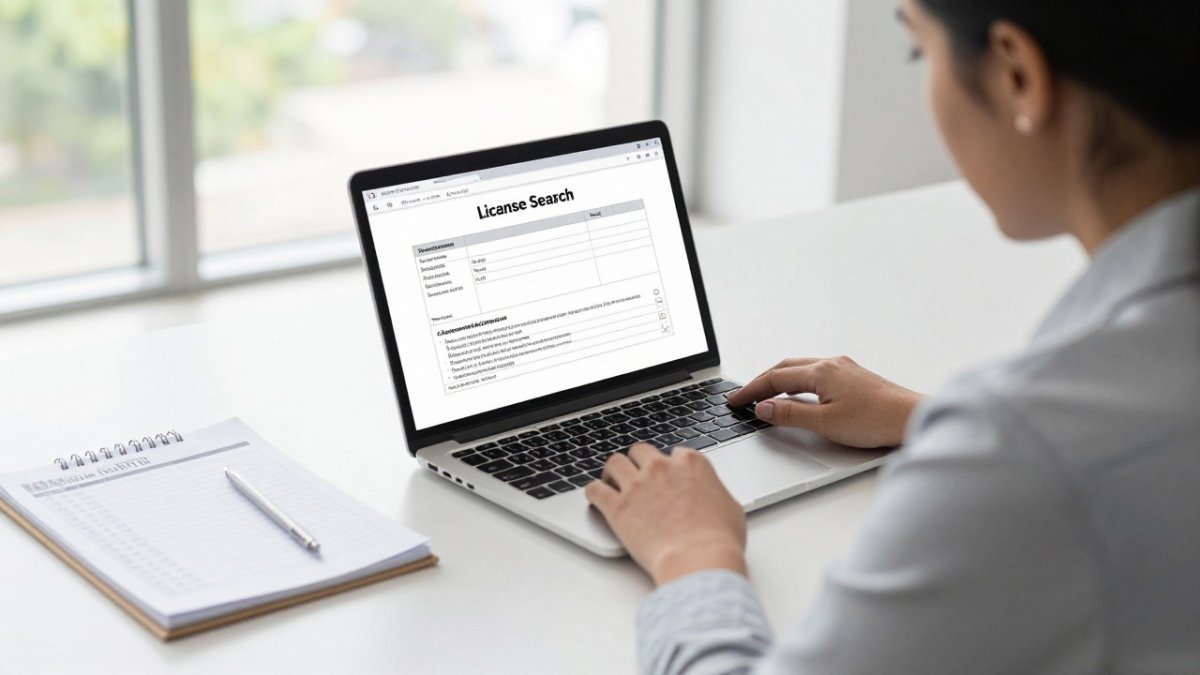
A practical way to find the right portal:
- Start with the state’s official website and search for “private investigator license lookup” or “private investigator license verification.”
- Confirm the page is on a .gov or official state domain before you enter any personal information.
- If the state does not license private investigators, the search will return no authority at all, which is itself a finding (see below).
- Bookmark the portal and the agency’s phone number, because you may need both.
Before you start, gather the information you will need:
- The investigator’s full legal name or business name
- Any license or credential number they gave you
- The license type they claim to hold
- The city or county where they operate
- The state or states where they say they are licensed
Searching by Name and Narrowing Results
Enter the name exactly as it appears on their license paperwork. If results are too broad, narrow them using a license number or a partial name. Common names can return many matches, so compare the city, license type, and license number before you draw conclusions. If the portal supports it, search by license number first; a number match is far more reliable than a name match.
When you find a match, check these details:
- License status: Active means the license is currently valid. Inactive, suspended, revoked, or expired statuses each mean something different, and a suspended or revoked license is a serious red flag, not a paperwork delay.
- Expiration date: A past date means the license has lapsed. A license that expired recently may be renewable, but until it is renewed the investigator is not authorized to work.
- License type and scope: Confirm the credential covers the work you are hiring for. Some states issue separate credentials for individual investigators, agencies, and sometimes interns or apprentices.
- Disciplinary history: Any listed action should be read carefully and questioned. A single minor administrative action is different from a revocation or a pattern of complaints.
- Address on record: Compare it with the office you are dealing with. A mismatch is worth asking about.
What to Do When a Search Returns No Results
A “no results” message does not always mean fraud. Try these steps first:
- Search again using a different spelling, a maiden name, or a middle initial
- Search by business name instead of an individual name
- Confirm the license type, since individual and agency licenses are listed separately
- Confirm you are searching the correct state’s database
- Check whether the state uses a different term, such as “private detective” or “investigations company”
If nothing turns up after these checks, ask the investigator directly for their license number and the name of the issuing agency, then call that agency to confirm. A legitimate investigator will give you both without hesitation.
Watch out: a search that returns a record with a different name spelling or a former business name can be legitimate, but it can also be someone else’s record.
Private Investigator License Verification by Name
Verifying an individual means confirming that the person you plan to hire holds a valid personal license. Look for an individual record that matches their name, not just a business entry.
A common mistake is assuming a company license covers every employee. In many cases, each investigator who performs fieldwork must hold their own credential. Ask who will actually do the work, then verify each person.
Private Investigator Agency License Lookup and Reading Results
An agency license authorizes a business to offer investigative services. It is separate from an individual license. An agency can be licensed while some of its staff are not, so check both.
When you review agency results, confirm:
- The business name matches the company you are contracting with
- The license is active and not expired
- The address on record matches the office you are dealing with
If the names or addresses do not match, pause before you pay. Ask the agency to explain the difference in writing.
Questions to Ask Before Hiring a Private Investigator
Verification is only one part of vetting. If you also want to know which surveillance equipment is legal and standard in Florida, read how to choose Florida PI surveillance equipment legally.
Ask specific questions and ask for documents:
- License number and issuing agency: Ask for both, then verify them yourself in the state database. Do not rely on a screenshot or a badge.
- Who will personally perform the work: Ask for the names of every investigator who will touch your case, then verify each one individually. An agency license does not automatically cover every employee.
- Scope of authorization: Confirm the license covers the type of work you need. Some states limit what investigators may do, and some activities, such as certain surveillance or records access, may require additional authorization.
- Insurance: Ask whether the investigator or agency carries general liability and errors and omissions coverage, and ask for a certificate of insurance. A licensed investigator without insurance may leave you covering losses yourself.
- Complaint and disciplinary history: Beyond the database entry, ask the agency whether any complaints have been filed. You can also call the licensing agency and ask how to request public complaint records.
- References: Ask for two or three recent clients in similar matters and contact them. Ask what the investigator did well and what they would change.
- Data handling and confidentiality: Ask how your information will be stored, who can access it, and when it will be destroyed. Investigators handle sensitive personal records, so a written policy matters.
Good investigators answer these questions clearly and provide documents without pressure. Hesitation, vague answers, or a refusal to give a license number are warning signs.
Watch out: a low price quoted before any of these questions are answered is a common pattern in unlicensed or underinsured operations.
Our team at AlphaCalibre can also point you toward appropriate private investigation services. You can review our private investigations services to see the range of work we handle, and our surveillance services if that is part of your needs. For personal or business decisions that depend on background information, see our background investigation services. If you are weighing the right kind of investigator for your case, our private investigator services page explains what to expect.
Beyond the license lookup, the article suggests confirming the points below before you hire an investigator.
|
Check |
What to confirm |
Why it matters |
|---|---|---|
|
License number |
Ask for it, then verify in the state database |
A badge or screenshot is not proof |
|
Personnel |
Names of everyone who will do the work |
Agency licenses may not cover each employee |
|
Insurance |
Certificate of general liability and E&O coverage |
Uninsured losses may fall on you |
|
Complaint history |
Ask the agency and the licensing body |
Public records can reveal patterns |
|
References |
Two or three recent, similar clients |
Shows real-world performance |
|
Data handling |
Storage, access and destruction policy in writing |
Investigators hold sensitive records |
Booking a Consultation With AlphaCalibre
Verifying credentials is the first step, but the right investigator also needs to fit your case. Contact our team to talk through your situation and get clear next steps.
Frequently Asked Questions
How do I know if a private investigator is legitimate?
Start by confirming the investigator holds an active Florida license through the Florida Department of Agriculture and Consumer Services licensee search. Check that the license number on the investigator’s card matches the record, that the status is active, and that the expiration date has not passed. Compare the business name and license type with what they told you. If the license cannot be found, or the details do not match, do not proceed until you have resolved the discrepancy directly with the state.
Where can I verify a private investigator’s license?
In Florida, the official source is the licensee search maintained by the Florida Department of Agriculture and Consumer Services at fdacs.gov. Use this official source rather than a third-party site.
Can I verify a private investigator’s agency license as well as their individual license?
Yes. An investigator may hold an individual license, while the firm they work for holds a separate agency license. Check the state’s licensing information for both the individual and the agency where possible.
What should I do if I cannot find a private investigator in a license database?
If you cannot confirm the investigator’s license, treat them as unverified. Ask for the license number in writing, confirm the license type they claim, and contact the Florida Department of Agriculture and Consumer Services directly before hiring them.
